ASRP.science
Frontiere della conoscenza
L'armonia è sconosciuta. La conoscenza è armoniosa.和合
- Scadenze precise e concrete
- Approccio individuale come sistema
- Soluzioni tecniche avanzate in anticipo sui tempi
- Apertura al nuovo
Journal
The latest publications from the journal.



Rivista stampata
The print magazine, the most popular articles and the newsletter.
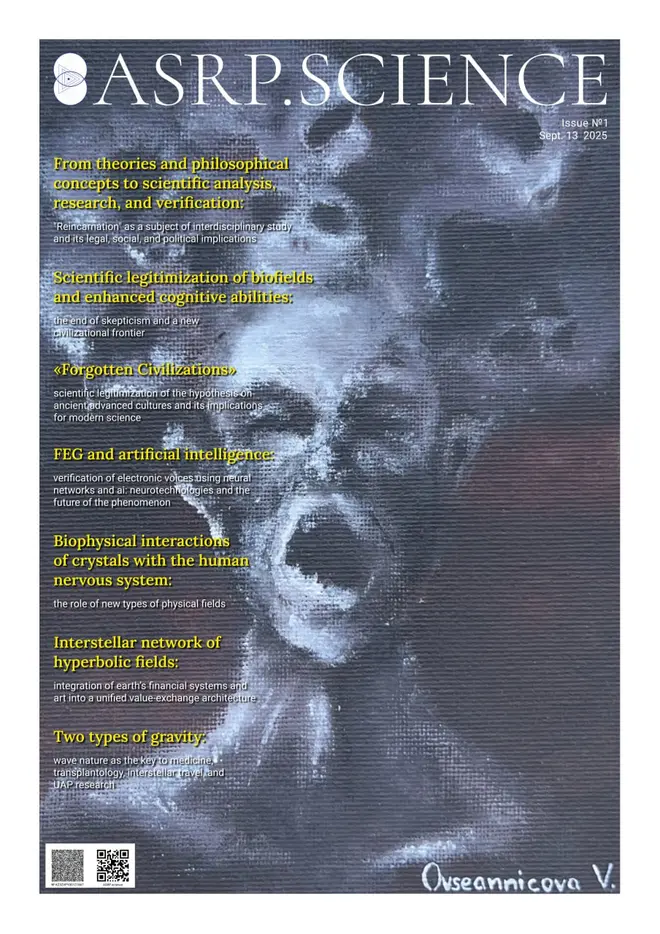
Rivista stampata
07/2025
Most Popular
Newsletter
Design news delivered to your inboxFeatures
What the platform is built around.
Innovativo
Esplora le nostre caratteristiche uniche per i ricercatori
La nostra piattaforma offre strumenti all'avanguardia progettati per migliorare la tua esperienza di ricerca. Scopri come le nostre funzionalità possono aiutarti a rimanere all'avanguardia nel tuo campo
- Scadenze precise e concrete
- Approccio individuale come sistema
- Soluzioni tecniche avanzate in anticipo sui tempi
- Apertura al nuovo
Science in 60 Seconds
Short-format science videos.
ASRP Short-Format Series
Science in 60 Seconds
A new episode every week — concise science for the curious mind.
La conoscenza è una zattera che scivola sopra le profondità piene di vita dell'incorporeo sconosciuto.
Ivan Savelyev
Editor-in-Chief
Authors
The researchers who publish with us.
Authors
All authors US
Uladzislau Semiletau
Job: Co-Author of Arcanum12th Courses, Education Specialist, and ASRP Researcher
 KZ
Kyryl Zmiienko
Job: SAIE, ASRP Artificial Intelligence division
 VO
Valeria Ovseannicova
Job: CBE, ASRP Biomediacal Devision
 IS
Ivan Savelyev
Job: CBE, ASRP Scientific Research Devision
 AO
Alexandr Ovseannicov
Job: CBE, ASRP Electronical Devision
 GO
Galina Ovseannicova
Job: CBE, ASRP Biomediacal Devision
 MK
Mykhailo Kapustin
Job: Q
 DB
Denis Banchenko
Job: CEO, ASRP
- NK
Nikolai Khorev
Job: —
Our difference
How we work and why it matters.
Cosa ci rende diversi
Flessibilità / Adattabilità
Combiniamo flessibilmente il capitale dell'autore con l'interesse del lettore. Adattiamo la combinazione di curiosità e del curioso
Concretezza
Siamo corretti, precisi e onesti nell'organizzazione delle relazioni. Abbiamo soluzioni concrete per garantire un'interazione appropriata a tutti i livelli
Oltre la congiuntura
Non dividiamo la scienza in 'vera scienza' e 'falsa'. Guardiamo in modo completo per vedervi in tutte le vostre forme. Siamo interessanti e voi ci interessate, sia come autore che come lettore